


No More Board Games
- Poppiena Horsington
- Nov 27, 2025
- 3 min read
Boardgames are function-killers
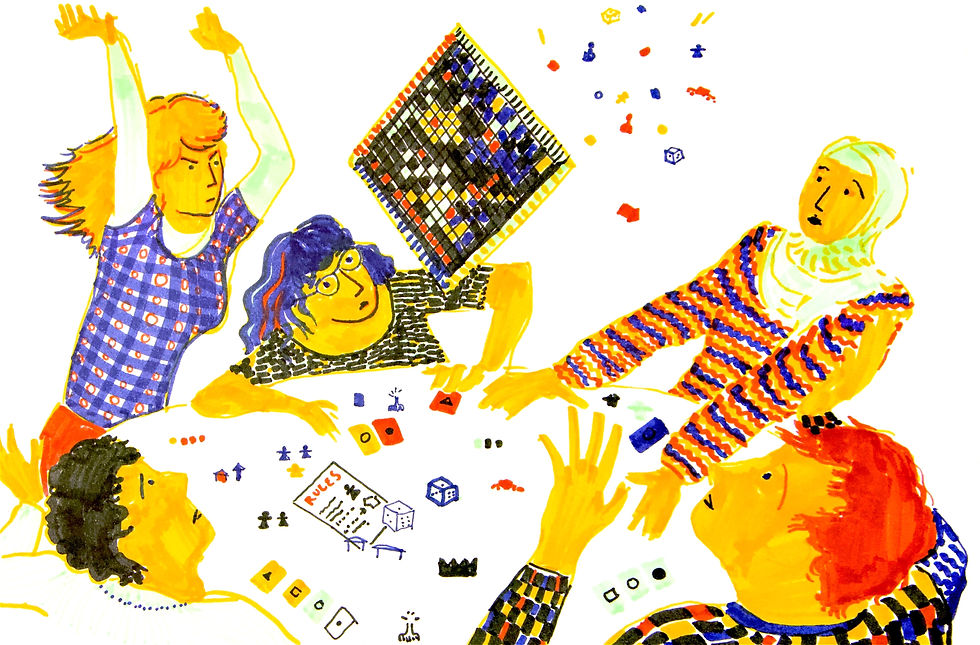
Seeing my friends when I go home means hanging out, laughing, and gossiping about one of the various dramas of our high school experience. I love these people deeply, and I carry them in my heart wherever I go. However, it also means facing one of my immense pet peeves: the board game. My animosity towards most games and their communal love of game nights is a divide that we simply cannot overcome, hard as we may try. Luckily, when I am around them, I can be open about my dislike, and they joke about my response to any game brought out whenever we play. However, the warmth of that safe space is not universal. There comes a time when a game is surprisingly unveiled at a party, and I am caught unawares. So, here and now, I am proclaiming that board games have no place being vivaciously whipped out at random functions — state ahead of time that it is a game night or keep that box of evil to yourself.
The concept of the game is expansive. Drinking or card, board or video, it seems that they are inescapable. As they constantly find new ways to reinvent themselves, I cannot be a hater of all games. My apprehension lies specifically with the board game, due to its excessive rules and clunky format. The card game is sleek and, I’ll admit it, sometimes even sexy. If you are adequately skilled, the game can be confined to just one hand. The board game requires more knowledge and paraphernalia than I am comfortable with being responsible for at a party. Moreover, this knowledge is often incredibly detailed and action-specific, and the equipment is often tiny and difficult to keep track of, especially in a crowded space. Any Monopoly piece is in immediate danger when placed in my hands.
However, my main qualm with games being thrust upon you at parties is the conflict between the reveal and the natural flow of conversation. Seemingly, upon its announcement, all dialogue has to cease so that we can gather to nod along to the rules of the game. Listening to someone long-windedly explain the intricacies of this merriment is often not as enlightening as the explainer thinks it is, and most of the time, I leave the monologue with no better understanding of how to play, but rather with a furrowed brow as I shuffle over to pick up some game accessory that I am unqualified to deploy. I could’ve been having my meet-cute or sowing the seeds of a beautiful friendship at this function, and now I must hush up so I can nod along to a fifteen-minute-long ramble about how to play. And, always, the game introducer tries to satiate my hesitation with the same false lines. “Don’t worry, it’ll get easier once you start playing!” or “I swear it's not as complicated once you start, haha.” What did I do to be condemned to this fate of moving my petite token around a board alongside other confused souls? I was an innocent bystander at a party, and now I am involved in something I did not even consider as a possibility. As Hailee Steinfeld sang, “I was so much younger yesterday”, before I had to endure an intense breakdown of a game I had never heard of.
The true trouble with introducing a board game to anyone is that it is an investment. You are coaching this group of people to garner enthusiasm and experience for this game so that you can play it with them later. You teach them the rules, you encourage them when they make a mistake, because you are seeking to build a safe space for your gamer community. Thus, you have to pick your crowd very wisely. Every game requires at least three rounds of playing to familiarise yourself with the rules, and you somehow have to emerge from those rounds still with the energy to keep going. You cannot assume that every Professor Plum with the candlestick or Colonel Mustard in the dining room wants to become part of this world.
I urge you, the next time you are at a party and think about bringing a game out, please consider the ramifications of your actions. Ask yourself if you are prepared to make everyone commit.
Illustration by Ramona Kirkham


Comments