


Can't We Just Sign In?
On the end of the humble username and password
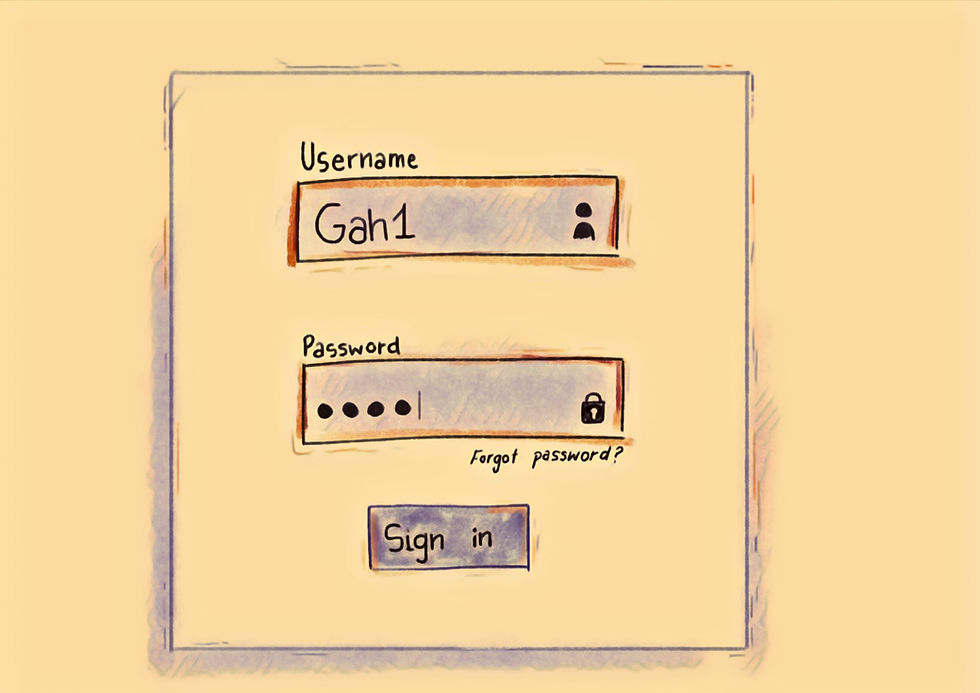
There’s a certain beauty in the way that rage against technology can bring us together. The struggle against online security measures in particular is a topic of common complaint. Linger long enough in the library, and you’re sure to hear dismal cries from students about a certain Microsoft Authenticator. A recent battle against Facebook’s system for creating an account (which resulted in a personal animosity against Mark Zuckerberg) sparked my nostalgia for simpler days. I cannot for the life of me remember the last time that I was able to log in to a website with only a humble username and password. Although once staples of online communication, they now feel like dated concepts, relics from the dark ages of the internet. To get anywhere now, we need reinforcements. Emails, phone numbers, recovery emails, video selfies, various reCAPTCHA puzzles, one-time passcodes; signing up for a new account feels like hacking into a vault of classified information. It seems that the prioritisation of customer experience has moved down on the list, having been replaced by stringent standards of security.
There is an overarching question that comes with this: are these measures really for our own benefit? To face facts, it’s not as if Big Tech companies have the best reputation for keeping their customers’ data safe. Usually, the very mention of one of these virtual empires brings to mind a void, sucking in every piece of information possible. For example, do we choose to believe that
companies need extremely personal details, such as our gender or date of birth, purely to enhance our experience with them? Unfortunately, this sounds too good to be true, and likely is. Each piece of information that we hand over could potentially do the opposite, increasing the risk of our data being sold, farmed, or otherwise mistreated.
On a similar note, the simplicity of online shopping may be in decline. For many of us, banners shouting “click and collect” or “free delivery” have become a part of our lives. And this was for good reason: the allure of doing your shopping online was that it was significantly easier than doing it in person. However, it would appear that online retailers want more of a connection with their customers. Gone are the days of a simple, one-off purchase with no commitment. Instead, we must prepare to enter scores of details about ourselves simply to get through to payment. One of the defining principles of online shopping — its lack of commitment — has disappeared. In fact, we may be about to witness this massive sector shoot itself in the foot. It’s come to the point where simply grabbing your shoes and heading out to your local high street or corner shop has become quicker than skipping through a slog of logins, memberships, and exclusive discounts. Just because I want to buy some milk or shower gel does not mean that I want to commit to an account which will only gather digital dust, somewhere in the background of my browser. Imagine you weren’t allowed to leave a shop after making a basic purchase without signing up to several loyalty schemes, none of which were of any interest to you. At this point, online shopping may be too clingy for its own good.
Ultimately, the good old days before multiple-factor authentication are gone. While managing how much the internet knows about us definitely feels like more of a challenge nowadays, it would be naïve to ignore the fact that it is a domain which is constantly changing and adapting. Enhanced security measures, irritating as they are, are symbolic of a new digital age that the username and password just aren’t advanced enough to handle. Online matters are making headlines more and more frequently, with Truth Social, TikTok, and AI constantly cropping up. These are modern wonders that require modern solutions. Perhaps it is time after all to wave a fond goodbye to the duo that helped us to navigate our online pasts, as the future of the internet will inevitably grow even more complex.
Illustration by Sandra Palazuelos Garcia


I’ve had mornings where I just wanted to check one account, only to spend ten minutes hunting for a code or approving a notification on my phone. At the same time, I’ve become more comfortable with extra security because losing an account would be far worse. I keep useful support pages bookmarked too, like how to contact google cloud, just in case. Technology keeps getting safer, but rarely simpler.