


Devil's Advocate: Is Smoking Cool?
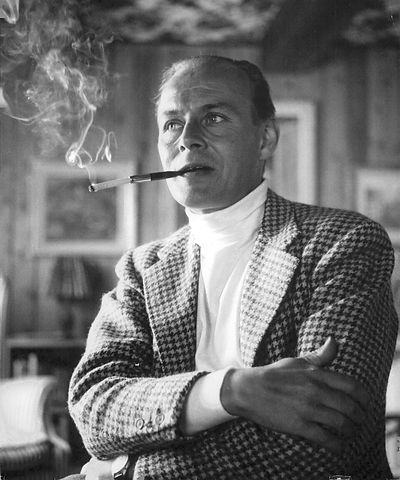
Yes - Petra Pender
Envision the most classically glamorous person you can. Perhaps you’re thinking of Marilyn Monroe, Audrey Hepburn, Marlon Brando, even Priscilla Presley. Effortlessly chic and unendingly chic, classy, these individuals encapsulate near-indescribable allure. And the other thing: they were all smokers.
Now, am I saying there’s a direct link between being attractive and smoking? Yes — though that could be personal bias. But, more significantly, smoking represents a dangerous, defiant, anti-establishment quality.
And who doesn't like a bit of danger?
Think of your bad boys — and bad girls — throughout media history; your Jess Marianos, your Betsy Rizzos. A huge part of their charisma is their devil-may-care attitude and spontaneity. Incidentally, both were smoking-hot smokers.
Beyond the retro-sexy appeal of the cigarette, there is the human aspect. Smoking areas are one of the only tertiary spaces we have left. AI-proof and free from phones, smoking areas cultivate conversation in an era when fewer and fewer places do.
Authentic connection with anyone is rare, but an environment built around a collective pursuit is the ideal environment to find it. Reminiscent of shared snacktime days, when we had nothing to worry about apart from who got the last carrot stick, the smoking area is a shared experience oriented around finishing your cigarette — the grown-up carrot stick.
The smoking area unites people of all perspectives and all walks of life around a singular objective. It is the demilitarised zone of open conversation. Smoking areas are open and welcoming places. Non-smokers and smokers meet to enjoy a breath of fresh air and winning conversation. A courtesy, might I add, that non-smokers rarely extend to smokers…
Had it not been for the smoking area, I would have missed out on many of the most politically and intellectually stimulating conversations of my life with people I otherwise would not have met. Forget sandbox love; lighter love is the future.
There lies another feather in the cap of smoking: its rich intellectual history. Marx, Chomsky, Fanon — all smokers, all great political thinkers. Would Marx have successfully consolidated his theory of production if he couldn’t punctuate a thought with a cigar puff? I doubt it.
What’s cooler than the freedom to pursue intellectual greatness? Nothing, so long as you do it with a cigarette in hand.
But enough about the past, smoking is actively cool now.
The cigarette is experiencing a cultural renaissance, appearing more often in the mouths of media darlings, including twice onstage at the VMAs this September.
Charli XCX smoked on stage whilst performing, and Nirvana guitarist Pat Smear collected the Video Vanguard award with a cigarette in hand, as a tribute to fallen comrade Kurt Cobain.
Kylie Jenner sparked public backlash after smoking a cigarette against a sultry-lit backdrop in a music video for Charli XCX’s ‘The Moment.’ Her previously PR-perfected image was tarnished, but her embrace of the rock-and-roll lifestyle gained praise from others who saw it as a rare display of authenticity.
In the culturally conservative early noughties, the zenith of the anti-smoking movement, such a move would have been unthinkable. But as the pendulum swings in the other direction, smoking is back in a major way.
Perhaps public displays of smoking aren’t cool as isolated incidents. But knowing that smoking is frowned upon or illegal is what makes smoking proudly outside a pub or up on stage so non-conformist.
Ultimately, that concept is what makes smoking cool: knowing it’s bad, but doing it anyway.
No - Joss Wildgoose Bulloch
In Year 10, I sat next to a boy called David. Looking back, there were many things I could have told you about him. David was an intelligent young man and would later study Classics at Cambridge. He was always personable and happy to indulge my hypotheticals. Nonetheless, sitting next to David during Registration five days a week, there was only one thing that my fifteen-year-old self would have been able to tell you about him: David smelled.
This was hardly his fault. A multi-billion-pound industry, decades of product placement, and the image of teen rebellion had encouraged him to pick up smoking. Not only did David’s lungs suffer, but so too did everyone in his vicinity.
Here, my classmates and I met with an impassable barrier. Differences of year, of sport, of house, even differences of GAIL’s orders, could be overlooked, but physical repulsion could not. However much we may have admired his mind or character, David’s breath stank.
Clogged arteries, ashy lungs, and an empty wallet were the costs that David bore alone. Yellowed teeth, cigarette butts, and the damp smell of tar that clung to his clothing were unfortunately the burdens he shared with the rest of us.
If you take a trip to Tokyo and wander down its streets, you might venture into a convenience store for a late-night drink or snack and spot a cloudy, smoke-filled room. This is a room full of Davids. In most wards of Tokyo, it is illegal to smoke on the street. So Tokyo has found somewhere to put them. In some convenience stores, there is a glass box at the back where smokers may find a moment to satisfy their craving. They step in, they finish, and they leave. Give it twenty minutes, and they’ll be back. Nobody in that box is talking; it is the loneliest room in the shop.
Leaving the shop with your milk tea, you may pause for a second and feel a pang of pity. Thank God you won’t be the one putting your suit through the laundry tonight, desperately trying to wash out the smell of cheap tobacco.
At the end of the day, nicotine joins alcohol, gambling, and other drugs in the rubbish bin of addictions. You may feel momentarily cool slamming back eight tequila shots, scooping up your pile of chips after a lucky run at blackjack, or popping pills at a festival. You will not feel cool waking up in a pile of your own vomit, losing your house on the slots, or ending up in the medical tent after an overdose. David, coughing up black phlegm during House Cross Country, did not look cool either.
David was fifteen, and the image he bought was designed for fifteen-year-olds. For decades, tobacco companies paid to put cigarettes in the hands of film stars while sponsoring the sports and bands which teenagers loved, because a customer recruited at fifteen is a consumer for 50 years. And there is perhaps nothing less cool than spending your smoke breaks — your fifteen minutes off the clock — still paying the tobacco company’s paycheque. Rebellion, it turns out, is a remarkably reliable business model.
To some, David may have looked mysterious, cigarette in hand outside the school gates. Admire from a distance, if you must. Your nose will thank you.
Illustration from Wikimedia Commons


Comments