


The Un-hoppy End of Brewdog

While the town mourns the loss of one of its most affordable drinking destinations, its workers are relieved that a company with a rotten core has met its demise.
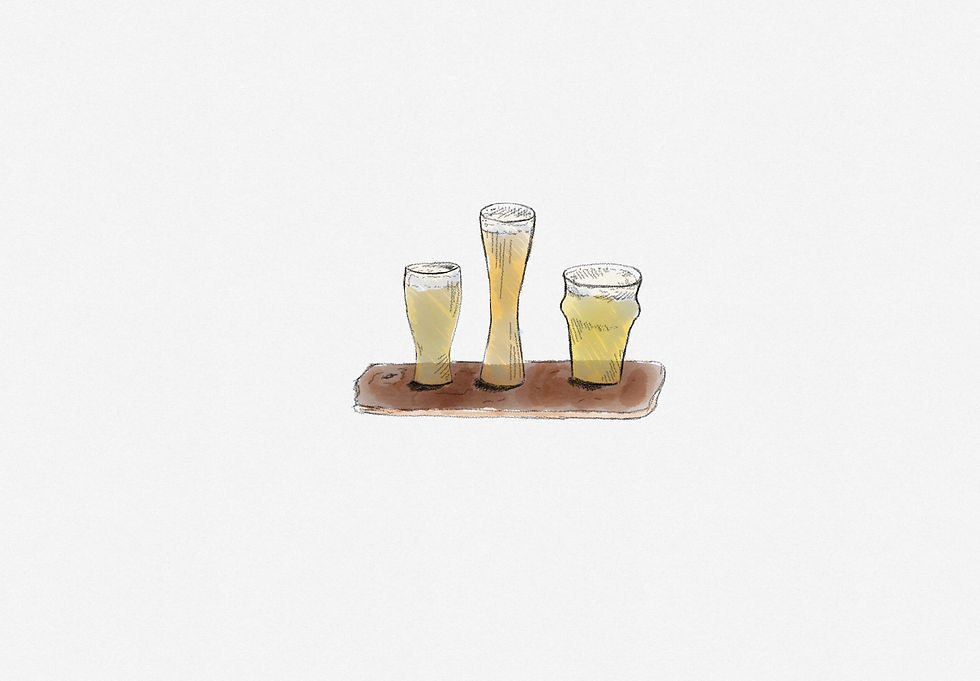
Ten minutes’ notice — that was how much time the staff at Brewdog were given before they were told via Zoom call that they were all being laid off. Brewdog was closing down. A Scottish company, once valued at £1 billion, was being sold for a mere £33 million to an American beverage company. And the 200,000 private individuals who invested their hard-earned cash in its fundraising scheme “Equity for Punks” (EFP) are left with nothing.
The passionately blue building now sits hollow on South Street, reflecting the hollow core of a company which made so many visionary promises but had no intentions of keeping them.
Matt is a student at St Andrews who worked at Brewdog for the last seven years. He joined, enthused by the company’s ethos of ‘beer for the people, by the people’ — a company which was built on small investments by normal people, not corporations. A company which treated workers with respect, paying them a living wage, including paid 30-minute breaks and even a free pint at the end of their shift — perks unheard of elsewhere in St Andrews. Matt even had hopes of building his career there.
After seven years of mismanagement, however, the company’s core values were gone. He was back on minimum wage, unpaid breaks, and constantly working understaffed. “It was a scam. One of the biggest scams I think the UK has seen in this century so far, to be honest,” said Matt.
Brewdog began in 2007, pronouncing itself as a wake-up call to the old and stuffy beer industry. Although from incredibly wealthy families, co-founders James Watt and Martin Dickie claimed to be different. They raised their investment by encouraging private individuals to buy shares with EFP. Over 200,000 individuals raised about £100 million.
Yet Watt and Dickie cut a deal behind their backs, selling 20% of the shares in the company to a US private equity firm for £100 million when it was valued at its highest at £1 billion. This gave the US private equity the position of first in line for any payout if the company was sold. Meaning, while it was the people who had invested in EFP, they were left with nothing. But James Watt and Martin Dickie walked away with a nice wad of £50 million each.
Matt told me about one of his favourite regulars, Francis from Anstruther, who had invested a decent amount of his savings into the EFP scheme. Committed to the company, Francis and his female golden Labrador retriever were “literally there from the day it opened until the day it closed,” Matt recalled. “I saw him almost every shift without fail.” Francis had believed in the vision of Brewdog until the end, but would never see a return on his investment, and wasn’t even given an official 25% discount on drinks.
“I hated the company,” Matt said. Despite working for Brewdog, he would tell regulars and EFP holders, “Your money is going nowhere but James Watt’s pocket.” Or perhaps also his wife, Made in Chelsea star and influencer Georgia Toffolo’s pocket, who often flaunts their luxurious lifestyle of their skyline London penthouse, endless holidays, and her estimated £200,000 engagement ring, on her Instagram.
As a naïve Brewdog lover myself, Matt’s words were painful to hear. Drawn in by the 25% student discount and the vast range of craft beer, I would often drag my friends to this performatively hip establishment, which painfully contrasted the cosier and more romantic pubs like Aikmans and the Central. I would blush coquettishly at the bar staff, in the hopes that they would let me try a range of their diverse selections of beers for free. They always would. Under the orange low lighting surrounded by neon strip lights and pseudo-rebellious signs on intentionally open brick walls saying vacuous slogans like “beers without borders” or “hops for the hopeless,” I — and I’m sure many other students — have many happy memories of birthdays, game nights, and farewell parties.
Despite his resentment for the company, Matt is still nostalgic for his days working at Brewdog. He misses serving the regulars who were always kind and patient, aware they were working understaffed. He misses working with his colleagues who became good friends — and who are now left with no redundancy pay from the company, and reliant on compensation from the government.
“I genuinely always enjoyed the job. I feel slightly bereaved not having it anymore because I felt like it was a fixture of this town in some way. And I felt part of that. I really loved feeling like I was in that sector of the community,” Matt said. “But below the surface, it was ugly as f***. And it will be the reason why I will never trust a company again.”
“It's such a shame because it really has left a sour taste in my mouth,” Matt explained. “The one lesson that I’ll take from it, that I think everybody should take from it, is that companies don't care about you. You should care about you.”
“Any way that you can take advantage of them, you should. If you can afford to do a little bit less, do a little bit less,” he said. “I'd say everybody should do a little bit less because they're not paying you out properly for it no matter what job you do.”
After being an IPA connoisseur, Matt is now back to drinking Tennent’s. When asked if he still drinks Brewdog, he said, “No, I don't think I ever will again.”
Illustration by Alice O'Sullivan

Comments