


A St Andrews Graduate Experience with War in the Middle East

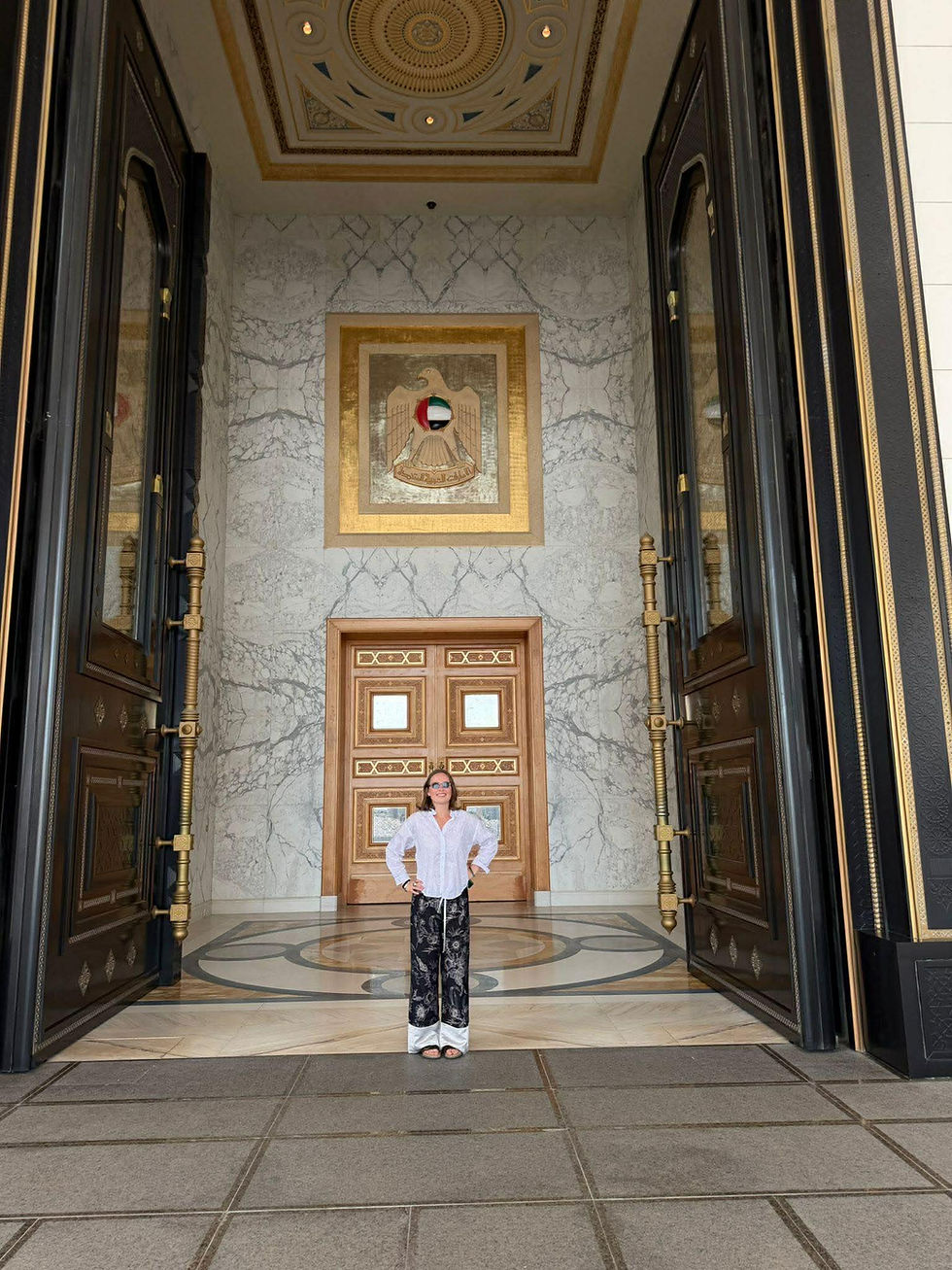
Lilly Gordon, 22, graduated from St Andrews in Spring of last year with a first class degree in Management. Just three months later, in late August she landed a job in Dubai working for an international business school, as an event coordinator. Although, after having spent not even a year adjusting to her postgraduate life, the US entered a war with Iran, causing a ripple of conflict throughout the Middle East.
“I wouldn't have said it was out of the question for me, Lilly Gordon, to have experienced war in my life. However, I would not have said that it would have happened in Dubai, of all places,” she explained. Dubai is a melting pot of culture in a city where obtaining visa status is commonplace. In 2026, the Emirati population in the city stands at about 11.5% of the total population. “It's the most diverse place I've ever been in my life. There are people from all over the world,” Gordon said.
With people flocking to the city from all parts of the world, however, there’s “a hierarchy within Dubai that is based on where you're from and the passport you have,” she explained. “The US is like the top dog in Dubai, because not a lot of Americans go. My eyes were opened to the privilege of having a really powerful passport,” Gordon said. In contrast, “people with really weak passports, for example, Iranians, don’t have it so lucky. [They] end up in Dubai because it's one of the only places that they can get to outside of Iran that's safe and they can make a better life.”
Gordon has long been interested in the Middle East.“I was unsure of what line of work I wanted to go into, and then this opportunity came up in Dubai. I decided to take the leap because it was in the region that I wanted to be in, and it was a good opportunity,” she explained. During a reading week in her second-year, Gordon decided to venture to Jordan. “I've always been a traveler. And then the first solo trip I ever went on was to Jordan, and I just absolutely loved it… the more I explored the Middle East, the more I loved the rich culture of the Arab world.”
Gordon's past and her present are distinctly dissimilar. “It couldn't be more different from life in St Andrews, not only climate wise, but landscape.” After spending 4 years living in St Andrews and later transitioning to life in Dubai, Gordon shared how this difference is stark in her everyday. ““St Andrews is an old, old place, and Dubai is brand new. I moved into a building considered old in Dubai, and it was built in 2011.”
On February 28, Trump decided to bomb Iran. The reasoning is still unclear, some believe negotiations were at an impasse over their nuclear and missile programs, while others think he felt the only way to deal with Iran was to change its leadership and establish a more reliable partner. “I think that it was extremely irresponsible. I think that Trump has created a geopolitical instability that is going to have enormous repercussions on not only the United States, but as I saw, in the whole region,” said Gordon.
The US had bombed the Islamic State earlier this year in June, targeting three of the country's nuclear enrichment facilities: Fordo, Naranz, and Isfahan. The conflict focused on limiting Iran's nuclear capabilities, not regime change. The most recent attack on Tehran targeted and killed Ayatollah Ali Khamenei, the country's supreme leader, signaling US commitment to regime change by decapitating the leadership.
On March 1, Marco Rubio came out and said “we knew that there was going to be an Israeli action. We knew that that would precipitate an attack against American forces, and we knew that if we didn’t pre-emptively go after them before they launched those attacks, we would suffer higher casualties.” Here, Rubio explains how the US folded to pressure from Israeli military planning. The comment was quickly retracted as American citizens reacted critically to the suggestion that the US military act was influenced by another country's goals and strategy. Gordon, and many other Americans don’t buy it, “I think Trump was played by Netanyahu, who's just been waiting for years to do this,” said Gordon. “And it's a shame, because it's going to cause a lot of uncertainty and potential damage.”
Life was progressing as normal as Gordon was meant to attend a drinks party that evening, Saturday, February 28th. The soiree got canceled because of rumors that Iran had started bombing the Abu Dhabi consulate. “We were walking to the pub, and they had tried to send missiles,” she explained. “There were five booms, in the sky, boom, boom, boom, missiles being shot out of the sky. It's so loud. It's actually crazy. It's so loud.”
Dubai is an unlikely target as it is widely viewed as neutral with limited direct involvement in regional conflicts, but Iran wanted to extract a price from the US and its allies. On February 28, the Fairmont Hotel got hit by debris. “The hotel is around 5 km from where I was,” Gordon said. “The port was also hit, and then in the morning, you could still see the smoke rising from the port where it was hit.”
“That was kind of scary. And then the really scary one was in the middle of the night. The alarm on my phone went off at like midnight, and there were more in the night, and we went downstairs to the basement, and we were there for like an hour,” she said.
The feeling in Dubai is still less tense than the media makes it seem. “I think that the significance of the Iran bombing, the GCC, is big. However, I don't think that the feeling on the ground is as terrifying as the news makes it out to be,” Gordon explained. “It's definitely being blown out of proportion… because Dubai has had this reputation of being a global hub for its glitzy and glam, that's why it's being so blasted into the news,” said Gordon.
Although unsure at first, it wasn’t long until Gordon decided she needed to leave. “It didn't really feel that unsafe. I just knew that I didn't want to be trapped in Dubai,” she said. It kind of felt like the beginning of COVID. And from COVID, I knew I did not want to be trapped there.”
Airports were completely shut for the first couple of days due to heightened security restrictions following the strikes. Slowly “they started doing a few flights a day. I mean, like we're talking like 1% capacity of the airport, most flights were getting canceled,” said Gordon. “I was really surprised, though, our flight was not full, like there were empty rows.”
Gordon had registered with the US Embassy and US Consulate for security alerts and state guidance.“They got us into this mess that caused them to have to save us,” she said. During the weekend, she kept receiving emergency evacuation instructions.
Although the tone of the message shifted: intentionally speaking on behalf of the government: “The U.S. government’s highest priority is the safety and welfare of US citizens abraod.” on March 7, the message became “There is no higher priority than the safety and security of American citizens for President Trump, Secretary of State Rubio, and the entire Department of State.” They changed the wording of the email to include Trump and Rubio. “It's actually crazy. We're in the middle of a crisis, and they're plugging their names in the email,” said Gordon.
“The war just kind of escalated everything, because all of a sudden, missiles were falling… We're like, we got to get out of here,” said Gordon. And they did. Lucky, she has left Dubai and returned from the war inflicted region. Remarkably, less than a year after graduating from St Andrews, Gordon had traded lecture halls and seaside walks for air raid alarms and missile strikes.


What a harrowing yet insightful account of transitioning from the calm streets of St Andrews to navigating such intense geopolitical turmoil in Dubai. Lilly Gordon’s perspective on passport privilege and the stark reality on the ground brings a very human element to a situation often overly simplified by mainstream media headlines.
Stories like this also underline how critical reliable connectivity becomes during unexpected emergencies abroad. When official state guidance, US Embassy security alerts, and flight status updates are shifting by the minute, having a fast home network with minimal latency similar to optimizing your setup for peak Xfinity Internet Speed is essential for staying informed and making split-second travel decisions.
Glad to hear she managed to return safely. Excellent reporting…