


The Evolution of the St Andrews Community Council

On the first Monday of every month, the Community Council of St Andrews meets in the Town Hall — a chamber adorned with chandeliers and imposing portraits of provosts past. The meeting I attended included seemingly mundane topics, such as ten minutes spent discussing Facebook passwords, and a point of order raised during an uncontested election. Interspersed, however, were also concerns like increasing the number of defibrillators in St Andrews, and Fife Council’s stewardship of the town’s common good land. The Community Council has a reputation, for those who have heard of it, for being “a talking shop.” I spoke to the current Community Councillors to see if the Council was indeed a defunct institution.
Callum MacLeod first joined the community council in 1986. “I came as a student in 1978 to study music, and I've kind of stayed on ever since,” he said. “Back in those days, the Community Council was the largest in Scotland — there were 24 members plus, and uniquely, I think there were [...], and there still are, three student members with full voting rights.”
A former chair of the Council, MacLeod, described “the golden ages” of the Council. One example was the 850th anniversary of St Andrews’ founding in 1991, with a large programme of events, including outdoor performances, a cathedral service, and commemorative souvenirs — “a real celebration of the history of the town.”
MacLeod has observed changes over the years. “At the moment, people feel a bit powerless because so much influence now resides both with Fife Council and the Scottish Government,” he explained. “I think people feel it's difficult to influence the decision-making bodies.”
In recent years, concerns about the social makeup of the town have also emerged. “When I was a student, there were 4,000 students, and something like 14,000 residents, and now it's about 10,000 students and 8,000 residents,” he said, “So coping with these quite major changes [in] recent decades does present a challenge to the people of the town.”
Mike Reid is a longstanding member of the Council, preserving a family legacy that dates back to his great-grandfather, who once served as the town council’s Provost. He described the unique difficulties of achieving consensus in a changing town like St Andrews. He described greater interaction between town and gown in the past.
“Across from the Keys pub, there was a big hotel, and you could walk in there any night of the week, and you'd find the guy who sweeps the streets with a university professor, you'd find the minister speaking to a guy who worked in the fruit shop. There was a mix,” he explained. “You had students who wanted to experience life in St Andrews. Now, unfortunately for the students, there's not really anywhere they can go to truly experience life in St Andrews.” In a town as diverse as St Andrews, where golfers, students, tourists, and locals live, defining community and catering to their needs is not easy.
Will the Council exist in 50 years from now? “I don’t know,” replied community councillor David Strachan. “I hope that we have seen significant reform at a national level of how voices can be represented in local areas.” Since the Local Government (Scotland) Act 1973 and 1994, St Andrews has seen a loss of localised power to larger regional bodies.
“St Andrews had those powers because of the historic and heritage significance of this town,” said Strachan, “but we lost them, and they've steadily got further and further away from the people of this town.”
Despite these changes, Strachan has successfully found a way to effect change. “On behalf of the people of St Andrews, we want to pressure Fife Council, who by law are responsible for it,” he said. “We want to pressure them into standing up and [doing] what they should do.”
Those efforts helped restore the rusting bandstand by the Scores. “Common good property, like the Bandstand, [was] being administered on behalf of the people of St Andrews by the Fife Council,” he explained. “The reason that the bandstands had fallen into such disrepair is [that] Fife Council were not looking after it properly.”
“So what we did was say, ‘Look, we've had enough. We want to raise money, and it's not really our job to raise the money, but we're going to raise the money and force Fife Council to be responsible,’” Strachan recalled.
Sandy Mitchell, a recent member of the Council, believes the Council is changing. “We are not just a talking shop,” he said, “we hope to become an action body [...]When I joined, the reformist members were outnumbered, but that’s starting to change. We’re beginning to show long-standing members that there is an alternative future for the Council, while also attracting new people to join.”
Mitchell’s drive comes from his past. “I didn't come from any money, but I was very fortunate to become quite wealthy through my work in restaurants,” he said. “But the end of my marriage and the restaurants in 2013 caused me quite a lot of mental health issues. I'm quite open because it's affected how I've met the rest of my life. You can reach the pinnacles of life and do everything, and you can also hit rock bottom.” This shaped how Mitchell approached the next stage of his life, including his work with the Community Council and efforts to make it more effective.
One of the initiatives Mitchell has undertaken is a Gull Management and Education Campaign called ‘Gary Says.’ Using his character, Gary the Gull, from his design career, the campaign uses a personable face to rebrand waste management communications in the town. “I got in touch with our MSP, and all of a sudden we've been able to pull people together [...] That's never happened before in Scotland. This could end up being embraced nationally within Scotland. That's one example of where I believe the Community Council can have a real impact.”
Carol Scrambler joined the Community Council last year. “I’m from St Andrews. I was born locally, I went to school at Langlands School, then Kilrymont School, then Madras College, and then I started working in St Andrews,” she said. “I’ve had a lot of my growing-up years in St Andrews, so I really felt as though I wanted to give something back.”
Scrambler highlighted a key project before her time — the “Local Place Plan,” a community-wide survey of priorities across St Andrews. The 36-page document was a result of months of planning and data collection by the Community Council. One outcome was identifying “the need for improved play parks.”
Since then, she, Marion Mason, and Neil Cunningham-Dobson have worked with Fife Council to push improvements at parks like Shoolbraids Play Park, with £25,000 already allocated to begin the process and hopes of forming a resident working group.
Describing it as “an influencing sort of situation,” Scrambler said their efforts “re-energised these conversations” and helped direct attention and funding towards areas already identified as needing investment, noting that without their work, “the priority and the money from Fife council [...] might have looked different.”
Neil Cunningham Dobson joined the Council nine years ago, and has worked on the Gary Says project, the Playparks Initiative and the LPP. “My ancestors were all from St Andrews about 300 years back, and I did my last year of school here,” he said. Heavily involved in St Andrews life, as a university student and even winning the Queen’s Commendation for Bravery for his work on the Coast Guard, Dobson now runs a business based in the town. He works as an expert in Marine Archaeology, specialising in shipwrecks. “St Andrews gave a lot to me,” he said. Like many others, Dobson became a community councillor to give back.
Dobson also believes the council is changing. “We've now got more locals [...] that know the town, [were] brought up in the town, understand how the town works.”
"Fife Council charges more for parking here than anywhere else in Fife, so they see it as a cash cow. They don't think that we need any [investment], and that’s probably the hardest thing — getting them to listen.”
“The LPP has changed that because a lot of us thought that we’ve got to meet [Fife Councillors] during the day, show them around the town, and explain what is wrong with the town,” Dobson explained. “I'm a community councillor because I care about the town and I want my kids who have grown up in the town and my grandchildren to have a good life here,” he said. “It means that I want to try and speak to all the different [stakeholders] to make it a better job.”
"We want to get more young people and more students involved, because they are here for four years,” he added. “Students work in the pubs and restaurants I go to; they’re all over town, and they live next door, so they are part of the community. We are always interested to find out what the students actually think,” Dobson said. “If you are a student here, if you’re interested in the town, and if you know there are issues that need addressing, contact the Community Council via the website,” he said. “Find a councillor or reach out to me directly, and I’ll go and speak to them to see what we can do."
Students can email hello@rbstacc.org.uk to get in contact.
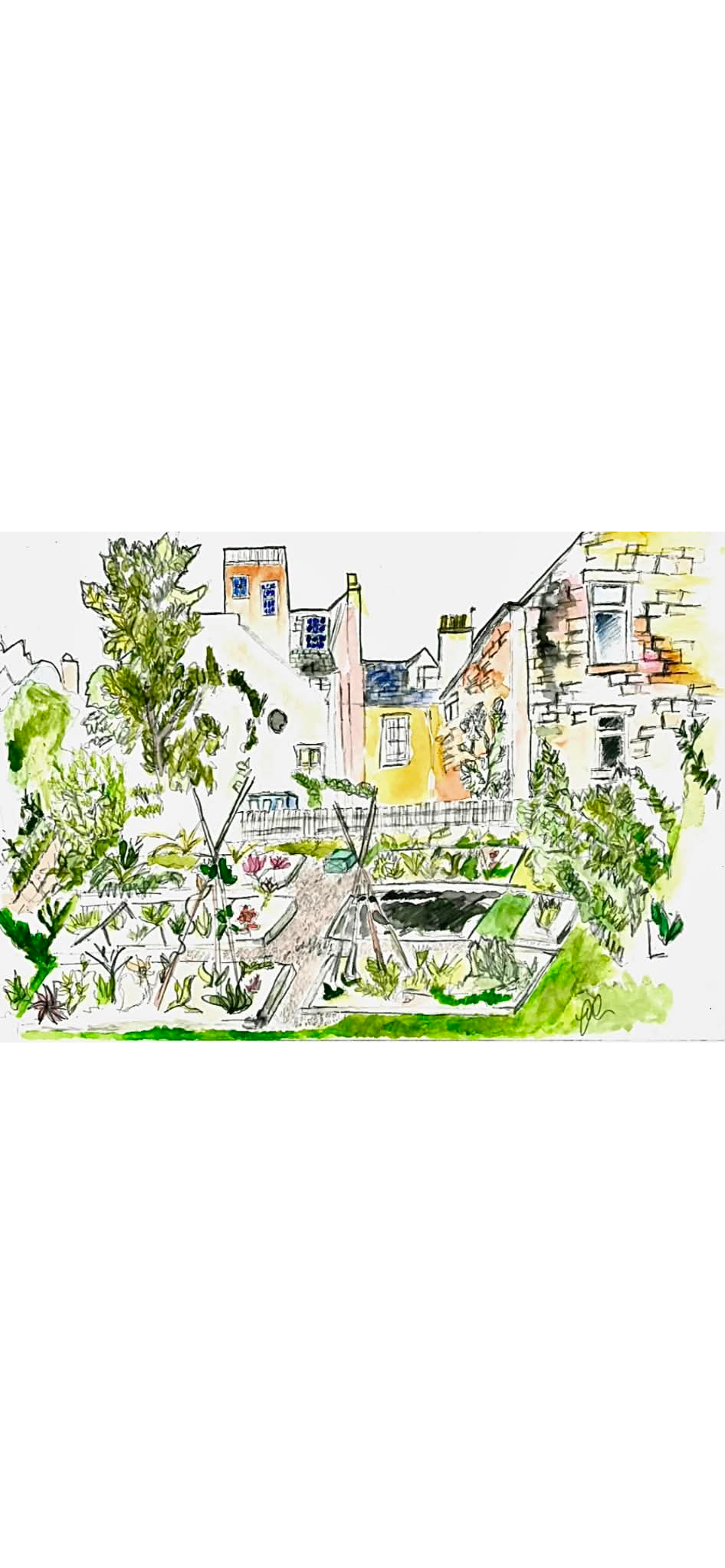
Illustration by Zoe Small

Comments