


Why Walk? Munro-Bagging in Scotland
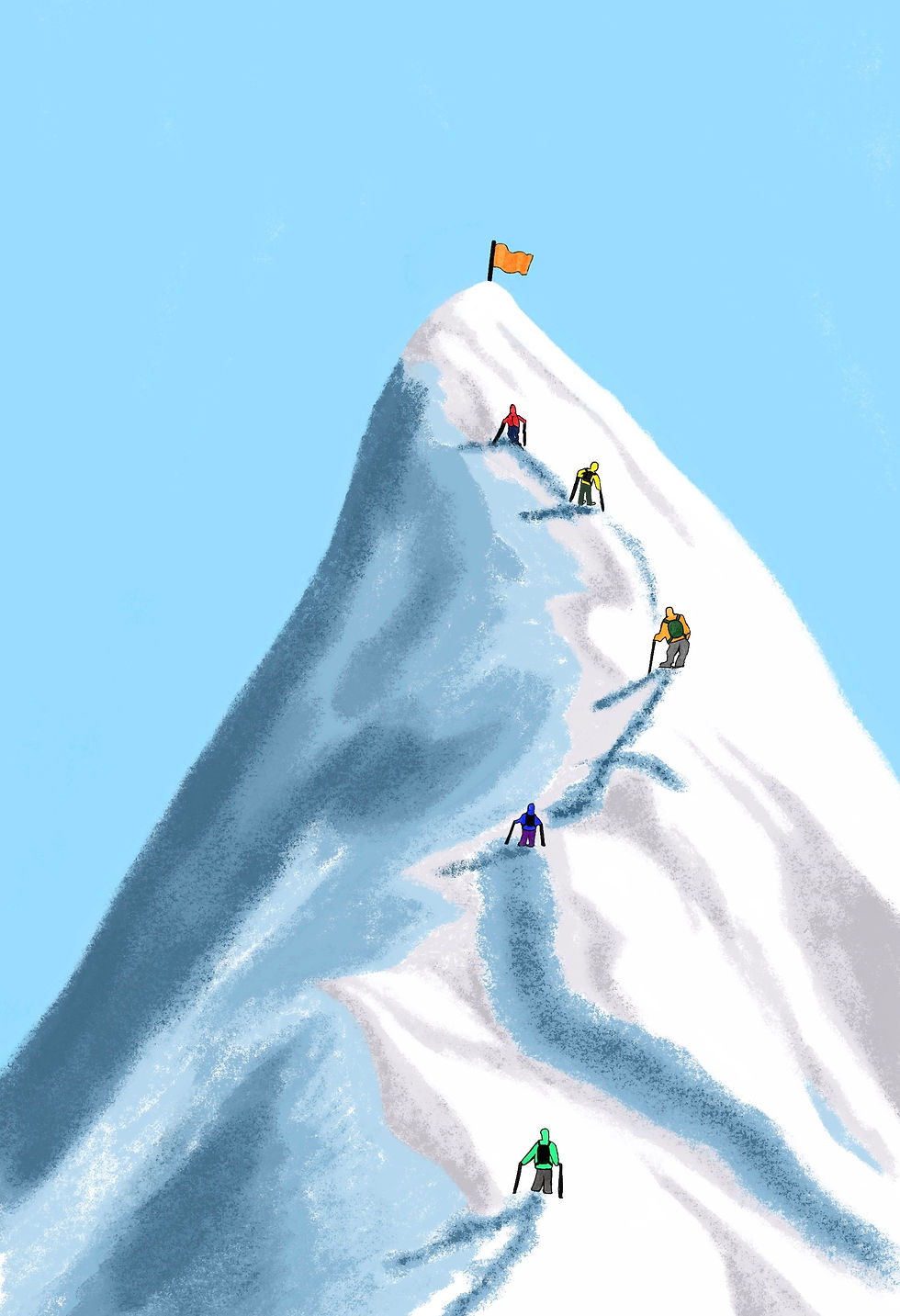
On a July day atop Ben Hope, a mountain on the north coast of Scotland, I wasn’t the only St Andrews resident sheltering from the freezing fog that had followed us on our ascent. David O’Hagan, a Chemistry lecturer at the University of St Andrews, was also climbing that day. This marked my first ever ‘Munro,’ while it was O’Hagan’s 128th.
Munros are a group of Scottish mountains officially classified by their peak elevation of above 3000 feet. Munros receive their name from Sir Hugh Munro (1856-1919), who listed tables detailing all the peaks in Scotland above 3000 feet in the sixth edition of the Scottish Mountaineering Club’s (SMC) triennial journal in 1891. Ben Hope is the most northerly Munro, isolated from its 281 counterparts by a distance of 32 kilometres.
One of O’Hagan’s fellow climbers was only ten more hills away from completing their circuit; the rest of the group had climbed Ben Hope earlier that year, and were re-summiting it to help their friend achieve another ‘tick.’ To me, this was a casual hobby, but for some, it is a competitive and tightly-regulated sport.
The SMC helps maintain Munro regulations by keeping a record of all confirmed Munro finishers. To log a completed Munro or full list, you must contact the Club’s Clerk of the List and if you are accepted, you earn the title of “Compleator.”
Memorabilia is exclusively available to registered Compleators: a tie, a brooch, and two different colours of snood. So, are walkers climbing 282 mountains just for bragging rights? What exactly motivates Munro-baggers?
Professor Kenneth Falconer, a Maths lecturer at the University, has climbed every Munro twice, finishing a full list first in 1985 and again in 2008. He is well on his way to a third round of Munros, with 208 “ticked off” the list so far. “I’ve been walking since I was a lad,” Falconer said, adding, “My parents didn’t have a car, so I got used to walking.” He lived in Bristol when he first began counting his Munros in 1979, so even getting to the bottom of a Munro was challenging. “I would get the night train from Bristol up to Glasgow and put my bicycle on it,” Falconer said.
These days, motor traffic makes cycling between Munros practically impossible. For most of his first two circuits, Falconer relied heavily on public transport and his bike to access these mountains. Falconer does not drive, and more recently, has been hitching lifts from friends to the Highlands.
Falconer’s lifetime of hillwalking has withstood a barrage of change — even within the list itself. “There were 284 [Munros] the first time I did them,” Falconer told The Saint. New technology allows more accurate measurements, so “the Scottish Mountaineering Club occasionally decree[s] that something doesn’t really deserve to be a Munro, or that something else does,” he said. When they discover that a Munro top is actually mere millimetres from 3000 feet, it is removed from the list.
Today, Munro-bagging is much more widely known than when Falconer started up his first mountain. With a hint of pride, he told The Saint that he was only “number 408” of official compleators, whereas “there are now about 9000” in total. In 2023 alone, 251 people completed the Munros, according to SMC’s ‘Munro Matters.’
This upsurge of Munro-baggers is partly due to the 2020 Covid-19 pandemic, according to Falconer. For him, searching for a way to connect without coming “too close” to anyone else pushed people further afield, and into the hills.
Like any popular sport, there is a ‘trendiness’ that makes certain mountains paradoxically too famous to boast about, yet so famous that if you haven’t climbed them, you’re not a serious bagger. Mike Dixon, an Inverness resident who was awarded the 2025 W.H. Murray Literary Prize for his exemplary articles in the SMC journal, finds this troubling. The “laybys full of cars at the bottom of Munro [starts]” are off-putting, he said.
Dixon manages to “see the quirky side” of the sport. He told me of unprepared walkers being “lured by social media, by pictures” into dangerous situations, stating that “rescue teams are busy” as a result. He tends to “go out midweek” in the shoulder seasons to avoid too much footfall. As Dixon points out, the renewed interest in the Highlands has its positives — there is a “fantastic range of literature: biographies, guidebooks” now increasingly in print.
For Gabby McIntyre, Vice President of St Andrews’ Breakaway Hillwalking Club, before climbing her first Munro, the online image of super-athletic Munro listers was “intimidating.” McIntyre added: “282 of the tallest mountains in Scotland? That sounds a bit crazy.” Completing her first Munro, Ben Lomond, she says, has helped her feel more physically “capable.”
McIntyre said that Breakaway has also improved her confidence, how “there’s a good culture of not being too competitive about it, but then also encouraging people to [...] get their counts up and do the Munros.”
For McIntyre, part of the allure of studying at St Andrews was the proximity to the Highlands. Munro peaks remind her of the mountains in her home, North Carolina: “It was [part of] the same mountain range [...] when it was Pangea,” she said.
McIntyre's fellow committee members, third-year student Mary McKeegan from Pennsylvania and fourth-year Kathi Reichert from the Black Forest, Germany, worried that “not being able to drive” would hinder them, but Breakaway has made getting into the mountains easy, they shared. Reichert found it outrageous that the mountains aren’t more popular among students when “you can see them from the library!”
Breakaway’s Fudge Fund provides free rental kits to students attending trips so that everyone can enjoy the outdoors, regardless of their financial situation. Loaning weather-proof jackets, trousers, and backpacks is essential to Breakaway’s accessibility policy.
In 2023, women comprised just 28% of Munro compleators, according to the SMC, but McIntyre and McKeegan both told The Saint that among student walkers, the split is “relatively 50-50.” Though the sport was historically male-dominated, Falconer observed that Munro-bagging is “certainly less” of a boys’ club today. McIntyre suggested that walking in a group can create a sense of security for those who might otherwise feel daunted by the prospect, opening up this once exclusive outdoor activity to a wider crowd.
Illustration by Sara Watson


Comments