


Let us Love Each Other Until the End
- Emma Ingram-Johnson
- Feb 12
- 3 min read
The Importance of Literature in Dark Times
The world has always been about to end. That is, if you listen to the words of Millenarians in 1789, modern-day Jehovah’s Witnesses, pagans circling around Stonehenge, or today, the students of St Andrews amidst a geopolitical crisis. Online, particularly, a mist of despair and fear has descended, muddying the path to a clear mind. This atmosphere of ‘dark times’ is no longer chimeric, even if you can drag yourself away from your phone’s never-ending loop of bad news. Students and locals alike avoid looking directly into the face of this hunched, brooding figure that lurks on the street corners of St Andrews, not naming it, not acknowledging how much space it takes up in their minds. As in most crises, attempting to escape these doom-driven thoughts through literature, art, and inevitably, a Wednesday night in 601, is a route much preferred to confronting them head-on.

Looking back through examples of impending doom in writing, ranging with lollopping gait from Biblical predictions of ‘Judgement Day’ to the anticipated computer-shutdown apocalypse of 2000, can serve to orientate some of these fears about the direction our society is headed. The Old Testament, drawing on Classical tropes, features civilisation-destroying floods, devastating famines, and wars which change the face of a nation. If the collapse of society or the physical earth is imminent, salvation cannot be far off. The visionaries of the late 1790s took this sublime depiction of apocalypse and applied it to their own circumstances, embedding it within their writing. With the French Revolution’s turn to bloodshed after 1792, writers like William Wordsworth and William Blake thought that the apocalypse had arrived — that this terror was the precedent for Christ’s 1000-year reign on Earth starting at the turn of the 19th century. Anticipation of apocalypse is a canonical experience — derived from a literary tradition of writing through terror in the Classical world, it is reshaped and reconfigured constantly throughout millennia to better suit its writers.
George Sand reappropriated these sublime ideas in her letters to Gustave Flaubert in 1870: “Everyone is dying, everything is dying, and the earth is dying also, eaten up by the sun and the wind.” While Sand and Flaubert wrote to one another to cope with their own personal apocalypses, their letters contain language remarkably similar to the increasingly deterministic conversations surrounding climate change in the next century of human life. As climate disasters worsen, finding new ways to express our fears through writers like Sand connects us to this canon of resilience in the face of earth-shattering change.
Amidst the pendulum swings of the Cold War, American writers similarly produced visions of a post-nuclear world. Edward Albee’s Who’s Afraid of Virginia Woolf ends in tableau, a bleak stillness following the rambling, nonsensical dialogue that characterises the absurdist play. Albee names his protagonists Martha and George after the Washingtons, constructing a lurid ‘origin story’ of the United States, only to destroy it, destabilising the potency of American civilisation. His apocalypse is perhaps the least comforting; he leaves us nowhere to turn.
Sand’s letter to Flaubert ends with an admission that she is unsure: “I don't know where I get the courage to keep on living in the midst of these ruins. Let us love each other to the end.” Even unsure, even afraid, we must “get the courage” to carry on. Crucially, we must also remember that what unites all of us in this fear is that we love our world and each other too much to part with it in the face of mindless destruction. I do not encourage ignorance of our increasingly disconnected, fragmented society, but instead, awareness that we have been here before. Perhaps we can only forge a convoluted path out of each near-collapse by writing through these crises, disseminating information and strength among our communities. Where our own words feel insufficient to encompass the voracity of suffering and injustice in the world, literature’s regenerative properties can act as a salve, soothing and reviving our fighting spirits.
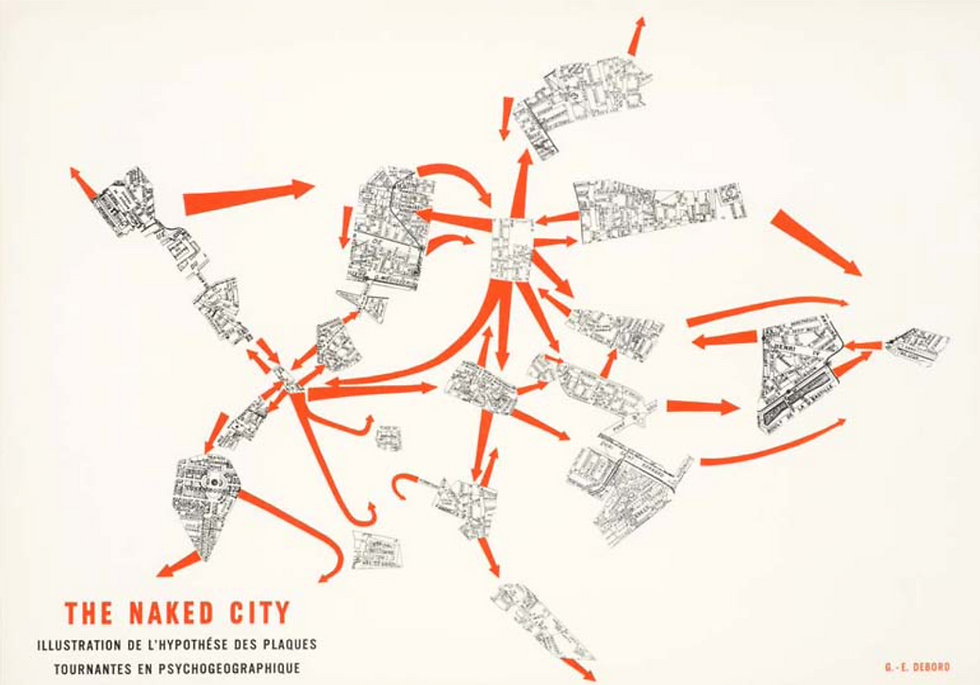
Illustration by Mokshita Nagandla


Comments