


In Conversation with Ron Carter
There are certain figures whose immense contributions exceed any attempt to summarise them. Ron Carter is one such figure. Since his career as a bassist began in 1959, Carter has reached and maintained a status as one of the most influential and original musicians of the last century. He is the most recorded jazz bassist of all time — playing on over 2,200 records — has won three Grammys, and continues to support many of the greatest musicians of all time with his sound, both in jazz and beyond. Suffice to say, you’ve definitely heard his bass before. The full extent of his discography is available online at The Ron Carter Universe. Last month, Carter released his newest record, Sweet, Sweet Spirit, a jazz-gospel collaboration with Choirmaster Dr Ricky Dillard and a tribute to Carter’s mother, whose favourite hymns the album reimagines. As part of our show JazzWorks Radio with STAR, my co-host Theo and I recently had the tremendous honour to speak to Mr Carter about his new album, unparalleled career, and philosophy to the music to which he has dedicated his life.
This interview has been edited for length and clarity.
Soren Rasmussen: I want to start with something I wonder [about] with professional musicians such as yourself, which is your personal relationship to music. What music have you been listening to recently, either for study or pleasure, or is it mainly reserved for your work?
Ron Carter: Well, for the past month, I’ve had my stereo in the living room out for upgrade, so I have had almost no music in my house. And because I’m working on this Sweet, Sweet Spirit project, I didn’t need anything else getting in the way. So I didn’t listen to much music at all because this project was so all-consuming and a little more personal than most of the stuff — I mean personal, personal — than most of the stuff I do [...] Now that my set is back in place, I would listen to some Carlos Jobim, songs from the Tide record, I may listen to Miles ‘All Blues,’ and I may listen to Samuel Barber’s ‘Adagio for Strings’ when I have that kind of space in my head that allows other music to get in the way.
SR: Concerning your new record, Sweet, Sweet Spirit, what was the experience of working with Mr Dillard and his great choir like, and did it change your relationship to those songs at all?
RC: He’s quite dynamic and quite visual, and I’m kind of the opposite: I just sit down and play the instrument. So it’s an interesting study to view the two approaches that got the same results with the same project. It’s like a nice laboratory. I thought that [it] was great to be one of the chemists with this mixture in front of me and see how we make it work. [...] I was always amazed at how they sounded, and their articulation of the words and the phrasing and the pitch was incredible, given all those voices spread out on the stage, and he’s dancing in front of them trying to give them cues and stuff, it’s just quite a view.
The more I listened to these songs — and I listened to them a ton of times — the more I understood what the words were. I came across these words when I was eight or nine or ten, going to church with my mom, as we all did back in the day of [the] early ‘40s and ‘50s; that was the church’s way of maintaining some kind of sanity given the times we were living in. We, the public — the African American public — just sang the words because that’s what we all did. But I listened to this record back and forth, voices and pitch, and the lyrics seemed to be more and more clear. What the lyrics were saying when I was ten years old. They were saying: give us a break, give us some help, give us equality, give us some presence. And to keep hearing that message replayed in 2026 was quite an amazing emotional experience for me.
Theo Robinson: With these duo albums, some of my favourite records of yours are your duo records with people like Jim Hall and Houston Person. What goes into the recording sessions like those, and how important is the relationship that you have with the other person?
RC: Houston and I, and Jim and I, had such an equal feel for each other. Not just an equal in playing talent or ability to play [well] with each other, but just such a high level of mutual respect for each other that it was like having a conversation. [...] We’re looking for a very special event to take place in our meaning. We trusted each other with [the] sense that when that moment is here, we jump right on it. Houston is a wonderful saxophone player, and I’m disappointed that most of the saxophone players of this 2026 young generation haven’t really investigated him and figured out how he was able to play with just a bass player. [...] Jim Hall and I go even further back. And just to know that on my left is this person, Jim Hall, who’s able to match my bass notes perfectly, who’s able to lead me somewhere where I might not figure to go, but who’s also interested in where I can take him and how I can take him to these places. That’s what these duo records show to me: that these two guys — me and Houston and me and Jim — are so specially connected emotionally, as a person, as a being, that anything we gonna do is gonna be just fine.
TR: Professionalism seems to be something you find vital to being a musician — things like showing up on time, dressing sharply, showing respect to the bandleader. Is that something you’ve always valued or something you’ve developed throughout your career?
RC: Well I’ve been a sideman for a long time. And I've tried to pick up certain things from each group that I was a sideman in that I might need to use whenever I got to be a bandleader. How to treat members in the band, how to plan a program, how to respond to the audience’s response or no response to the song. Are the songs in the right order? Are they too long? Are they too short? I try to pick up these things from each person who’s been leading me somewhere and try to add that information to my menu of things to be aware of when I need to have this certain spice added to the set. Maybe I’m more demanding than the talent I’ve hired can do, and just [need] to step back a minute and let them do more that I’m hoping they will do as I’m trying to lead them verbally and musically on the band stand. So all these things that you mention, they’re a compilation of seventy years of watching people do this coming and going and picking out what I think I need to make me a viable bandleader and still be a friend to the band.
SR: Moving on to your role as a jazz educator, are there things that you find all young musicians need to know?
RC: They’re really basic things. Maybe they should get a teacher so they play their horn better. Maybe they should study composition so they know how to write a song due to some kind of rules and regulations that make songs do what they do. Maybe they should care how I, in this case, take care of my instrument. It’s always clean, there’s nothing on it, there are no cracks, there’s no damage done that I haven’t repaired. Maintaining your tools. Buying a good quality suit because sometimes you can’t get to the dry cleaners between gigs or the cleaner’s not nearby to get their suit pressed and cleaned [...] There are a whole host of basic stuff that guys need to not necessarily adopt to but understand what the history is in this case of preparing to lead a band. And unfortunately, most of the newer leaders, and I hope I’m not offending anybody, they don’t have that experience of being a sideman very long and very often. They’re encouraged to be a band leader. Well, I’m not sure those people who are encouraging them understand what they’re asking them to do, whether they’re prepared to make some sacrifices to be a good band leader, other than saying “I’m the band leader.” It’s just not quite enough.
TR: On your experience as a sideman, you’ve described working with Thelonious Monk in the ‘60s as an important experience for that week of gigs. Was there anything in the way that Monk treated the tunes that changed how you’ve approached them since?
RC: Well, that was my first [time] meeting him on this gig. I knew who he was, of course, and I may have had a record or so, and certainly at the time in New York, there were two or three jazz stations that played everybody’s music. And of course Monk at the time was one of the hotter musicians who were getting airwaves directed to his music. So I knew who he was, and I didn’t know if he knew who I was. All I knew that he knew was that Sam Jones, who was the bass player on this gig, had gotten sick. And he called me to cover for him, Sam Jones did. I’m assuming that Sam Jones, the professional that I knew him to be, would have called Thelonious Monk to say that he’s sick and he’s sending a guy who can do the job in his place for this one night. It turns out to be another week in Philadelphia. I don’t know whether Mr Monk checked me out on Google or asked around who is this guy Ron Carter that Sam Jones is throwing at him at the last minute. I don’t know any of those details. So my [answer] to you [is] I don’t know because I don’t know what he expected me to do other than sub for Sam Jones. Not knowing his library, I couldn’t Google or go back to resources and listen to any of his tunes because I’m working at other gigs. I’ve got a family, I’ve got a life. I don’t know how many tunes I gotta learn, I don’t know his library on the bandstand, I don’t know if he’s playing only his tunes, I mean stuff. So he’s at my mercy too. He’s gotta hope that I’m a quick study enough that if I know the song, I play it real well, if I don’t, I learn it before the second chorus is over. So it taught me another view of, when you take a gig, especially with a stranger, leave my ego at home and take a special pair of ears to hear what this guy’s gonna do before he does it.
TR: Miles Davis famously spoke about this idea of ‘being comfortable’ as impeding musicians. What’s your personal relationship to the idea of ‘being comfortable’? Do you think an artist can be comfortable and healthy?
RC: Well, I’m not sure how he defines comfortable, and because he’s not here, he can’t back up his statement with a more clarifying definition of comfortable. But I think that, as a bass player in the band — and with how important I feel the bass player is to any group — my broad view of that kind of response is that I don’t want them to get comfortable with me. My job is to keep them just enough on edge that I have their undivided attention. If he’s gonna go to his iPhone while I’m playing or he’s gonna leave the bandstand to hang out with his friends, those things are not in my travel book. They’re not on my menu. And I want those guys to be on edge. I want them to trust my judgement. I want them to understand my history with the music. I want them to understand that I’ve been here a long time and I bring something to the table that maybe their bass player, as young as he may be, hasn’t had a chance to experience on his own, and can’t bring this particular item to this particular gig with this relatively inexperienced and new band leader. Having said that, I say that very cautiously because I don’t want those young people, whoever they are, to feel that I’m against new music. Or new players. Or what they call ‘new concepts.’Well, there are not many new concepts that I haven’t played already in the 1960s, and ‘65, and ‘70, ‘75 and ‘80, and ‘85 and ‘90, and 2002, 2003, 2003 and a half, you know. I’m a chance for them to kind of catch up on history. One of the things I love about Russell Malone: he was clearly a jazz historian. Not just with jazz music but guitar players. He knew all those guys. He watched them, he talked to them, he would call them up on their birthday. He would establish a physical relationship with these guys. All these guitar players. And that was his way of being a walking historian, and a very active historian about the history of not just the music, but these guys who made it happen on guitar. That’s very important, and I think I’d like to see these young guys less focused on their band leading and find out how other guys did the bands. But we’ll see what happens when they call me.
SR: On the subject of deciding who you’re going to work with: when you approach a new project today, what are certain things you look for when you’re deciding who to be in the group for a new set or record?
RC: Unless it’s my record, I kind of avoid getting that personnel [...] I’m not really interested in booking a band under someone else’s name. That’s more responsibility than I want to handle. But I like to think that whoever is called for the band that I happen to be in, I’ll do my best to make us compatible. What are this person’s strengths? Can he stand the pressure of doing only one take and having it be the one that’s on the record? Has he prepared for the record? Has he had the music in advance? How well does he read music? How well does he want to play someone else’s view and have that view cover the record? I mean, there are a lot of factors involved [...] That’s more personal, and the feelings get really hurt if you don’t call the guys who they think should be on the date.
SR: What about when you are the bandleader?
RC: Well, my first band was the piccolo band with Buster Williams, Ben Riley, and Kenny Barron. And anyone who’s gonna follow these three guys, they’ve gotta be happening. So when Ben, Buster, and Kenny decided to join Charlie Rouse with the Thelonius Monk project, Sphere, I had to get a new band. So what I did for the bass players, who’[re] gonna be my partner on the stand, I called in an audition with four or five guys who were on the scene, some recommended and some that I heard of, and we had an appointment at my house to play the band book. Because there was a bass book. There was a drum book. There was a piano book. We were not jamming all night, guys; we have some parts to play that I wrote. And I want to hear them. I want whoever is gonna be in my band to play them and not get pissed off because it’s not their music. Guys, get your own band. Right? This is not a job for you guys. Some guys came late to the audition, so that doesn’t fit very well with me, but we’ll see what happens. Some guys came and they hadn’t looked at the music. I mentioned that we wear suits with the band, and some guys said, “Well, you know, that’s not my saying,” so I just took his name off the list because that’s my saying. A couple guys wanted to know if they could solo when they felt like it. I said no, we have a band where someone decides who solos, that’s what one of my jobs is. That’s one of the things that makes me the bandleader, not sub-leader, leader. And they say, “Man, well, suppose my friends want more solos from me?” Well, tell your friends to get you another f***ing band. So you can be the bandleader. So that you can play your brains out, and no one will care because it’s your shit. OK. So those are some of the things I went through when I was putting together my various replacements of the band. Right now, Irene Rosnes, or Kenny Barron, certainly if he’s available, or Donald Vega; they’re the piano players on call because they know the band book, they know what they're responsible for responding to. Boots Maleson has been my bass player for the nonet and for the quartet for about thirty-five years; there’s a reason he’s still there. If you guys want to be a sub, come by and spend two nights at the gigs to see what he does that makes him more of a sideman that I’m looking for, that I try to emulate when I’m not a bandleader, when I’m a sideman.
TR: On the topic of that record Piccolo: I’m a huge fan of that record and your use of the piccolo bass. Has there been anything else that you’ve discovered with the piccolo bass in how you can play it and experiment with it?
RC: Well, I wanted it to be so special that I only played it with the nonet. I think that gives it another uniqueness that you don’t see every day. It’s not like an alto player playing soprano saxophone one night a week for his other thing [...] I wanted an instrument that would sit me in front of the band so when you walk [through] the door you see the guy who’s the bandleader holding the bass. That’s what I was trying to get, first of all. And secondly, I wanted a sound that would be out of the bass player’s normal range of sound so he wouldn’t have to be necessarily concerned all the time with avoiding the range I’m playing in. And this bass that I had made, it’s tuned up a fourth, so already I’m four notes higher than this guy's gonna play. If we finger the same note, I’ve got four notes on top of that. So this was interesting for me to figure out that combination. One of the things I learned is, again, to pace the band better. And that means I’ll be careful about playing two or three fast tunes in a row, or two or three loud tunes — things that bandleaders did to me when I was a sideman that were abusive [...] Having experienced some of those unpleasant moments, I decided, since I’m in the lead chair, I want to treat these guys like I felt I [wanted to be] treated.
TR: In recent decades, there’s been a lot of discussion about the relationship between music and technology, with Emmet’s Place during the pandemic and Open Studio as this new education platform, especially with AI as well. What are your views on music and technology as a relationship? Do you see the two as compatible going forward?
RC: Well, if they’re gonna electronically alter my sound on records I’m on, I would be offended. I’ve worked years and years, and every night I go to work, guys, to make sure my sound on this gig, for this record, is a reflection of my sound down through the years. I work on developing this sound whenever I play the bass. Where I play the bass. What notes I pick. What sound did I get from my hands that day? How the bass responds to the weather changes. With the temperature in the room, when it gets real cold, the bass gets out of tune [...] stuff that I’m aware of that I can be responsible for that represents what I think the bass can sound like in my hands. And to find out that a year later, someone has gotten this track and has manipulated it through their electronic genius; I’m very offended. And I’ve done some of those records where I’ve heard the electronic stuff on and I said if I had known they were gonna have done that, I would’ve played a different set of notes that would allow them to have more flexibility [...] Well, I didn’t have that choice so they had to bust their chops trying to make their dream of having my sound sound like Mickey Mouse or sound like a flute. That’s a lot more complicated.
TR: Douglas Daniels, the biographer for Lester Young, described this mythology of jazz as existing, which is hard to dispel, even with the facts. As somebody who lived and breathed jazz history, do you see a mythology surrounding jazz, and do you see it as helpful to its history?
RC: Depends [on] what they’re saying about the guy and whether they have had the chance to play with someone who actually played with this person. I don’t know about the mythology of Chet Baker, for example [...] All I know is when I called him to do this record called Patrão — that had Kenny Barron and Jack DeJohnette and me and some Brazilian guys — he came by my house, got the music a week early, and he was at the date as I was walking to the date. I explained to him, ‘Chet, we have one day to make this record. Don’t fool around.’ And we got a great, great record. I’m really happy with not just how he sounded but how he respected my process. That’s what it is. We didn’t go out to lunch between takes; we didn’t have a lot of friends. Whatever mythology I might’ve heard about him, I didn’t have to deal with that because I worked with this guy. He was amenable to reading my menu, because I’m the store right now. I have the goods. And so whatever mythology I may have heard or since from his history, I would not accept that because I played with this person [...] and it was fun playing with this guy because he had some ideas that I could help him best find a place to play them. So the Chet Baker mythology or whatever it was, I tell the guy, ‘Get out of here, you don’t know him. You never saw him or played with him.’ So mythology does what it does, it creates images that are not necessarily accurate; most times they are not; most times they’re just a temporary idiosyncrasy and just a moment this guy says, ‘Well, I’m gonna wear a red tie all week,’ and then he does something else. ‘But no, that’s his mythology.’ C’mon man. Did he play good? Was he in tune? What kind of notes did he play? Was he respectful to the bass player? If it’s gonna be like that, it shouldn’t be such a derogatory point of view. [...] I’ve heard rumours about a lot of guys I’ve played with down through the years, and when I see these people who ask the same kind of question about mythology, and ‘I heard that this guy —’, I say, ‘Well, my experience with this person has not been that at all.’ And I have said, ‘Please don’t spread that rumour on my behalf.’ Because that’s not what I saw [in] this guy. When I saw him he was pleasant, he liked my kids, he was on time to our meeting, he respected me wearing a great tie, he wanted one of those. All those rumour-mongering items I refuse to accept. And I will not be a carrier of those rumours that are very seldom positive. They’re envious.
SR: As a final question, I’d like to ask you about the New York scene, since you’ve been a part of it for so long. Looking back at how it’s changed, are there things that have gotten better or things you wish were still present?
RC: One thing that I wish was still present is more jazz on the radio in New York, clearly. The towns that have radio programmed jazz are few and none. I wish that we had the same accessibility to the radio waves in 2026 as we had in 1926. Because back in the day, man, when I came to New York, there were four or five stations that played jazz 24 hours. And they had knowledgeable disc jockeys; they had a great library; they played some wonderful records. They played some that weren’t so good, but I enjoyed them. [...] I miss that accessibility to people who[m] I don’t know and can’t see because they’re either in Kansas City or San Francisco, not in New York, down at the local club. I wish that would come back to our generation, to this 2026 generation. [...] I wish the audience had more chances to hear more music vis-a-vis the radio. And the third thing I would hope is that musicians continue to get better every night. Don’t accept an off night as being okay because it’s just jazz. No man, get away from here. Get out. Bye.
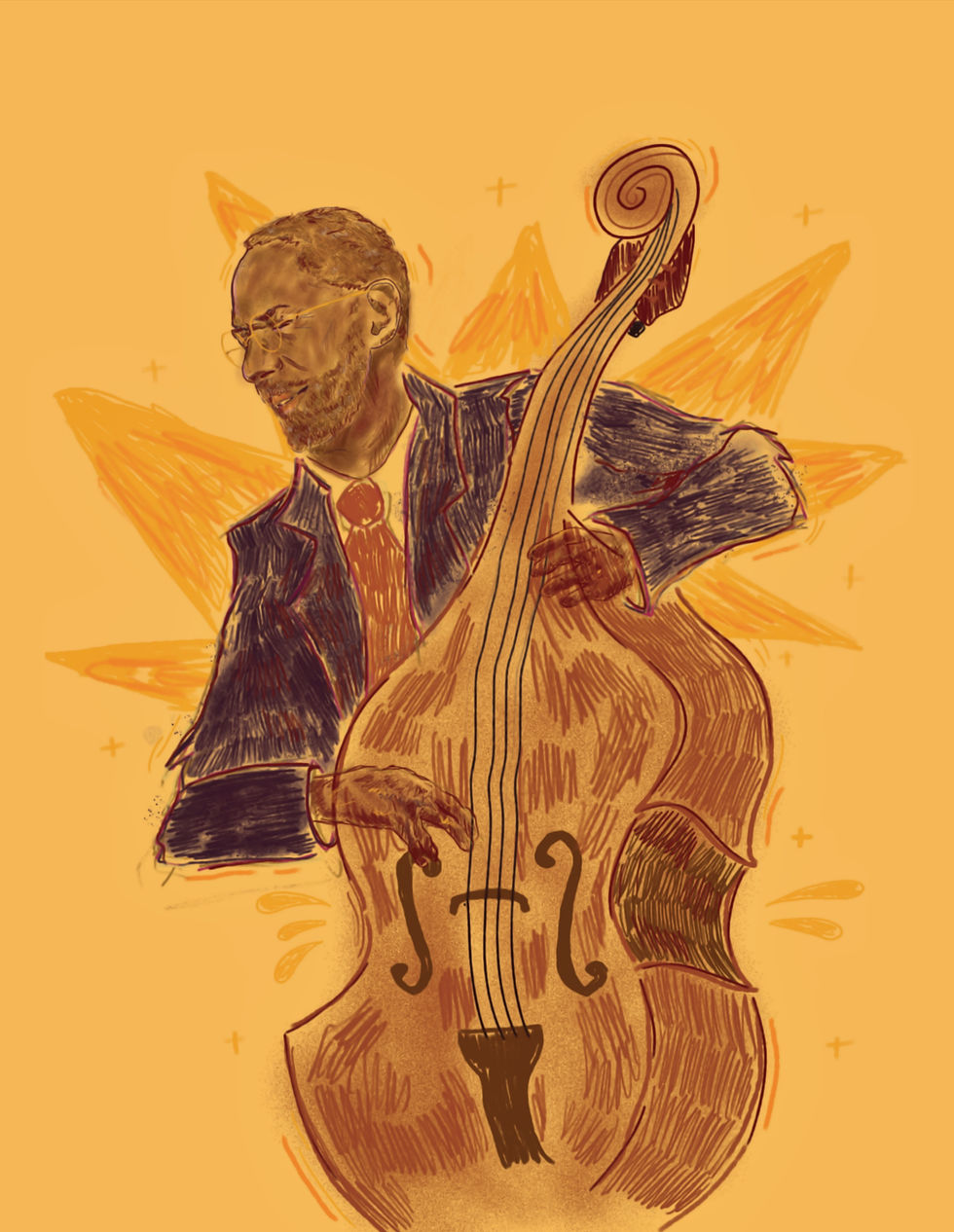
Illustration by Sandra Palazuelos Garcia


Comments