


EIFF: First Class Standouts

Ten highlights from this year’s Edinburgh International Film Festival
Marking Scheme
16.5-20: First Class | 13.5-16.4: Upper Second Class (2:1) | 10.5-13.4: Lower Second Class (2:2) | 7-10.4: Third Class | 4-6.9: Fail (with right to reassess) | 0-3.9: Fail (without right to reassess)
Feature Films

The Incomer (dir. Louis Paxton) — 16.5
The festival’s opening film and an instant gem of Scottish cinema, Louis Paxton’s debut feature follows the story of eclectic siblings Isla (Gayle Rankin) and Sandy (Grant O’Rourke) as the only two inhabitants of a fictional Orkney isle who find their lives upended by the arrival of Daniel (Domhall Gleeson), a socially inept council officer ordered to evacuate them to the mainland. Rankin and O’Rourke shine in this off-the-wall comedy with a distinctly Scottish sensibility one can only hope is the start of a long and successful career for its young director.
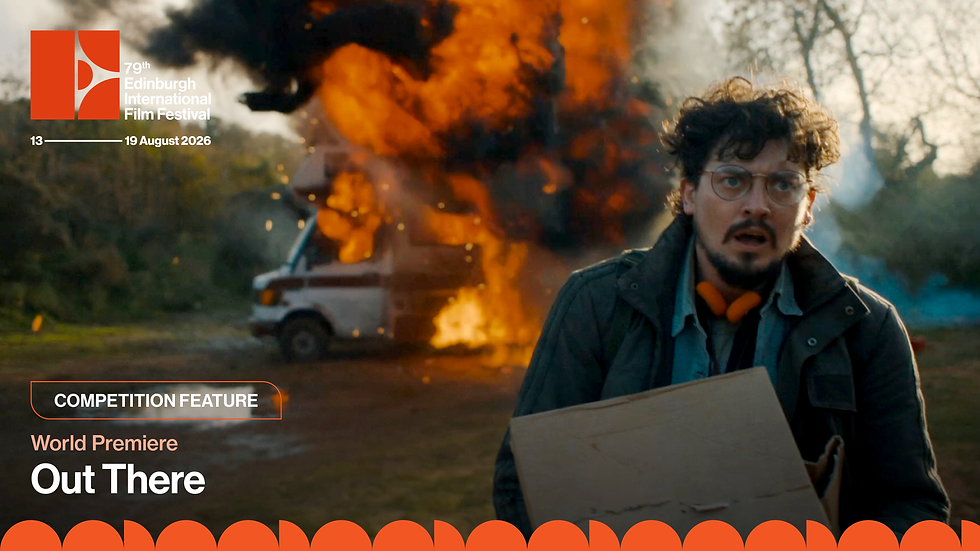
Out There (dir. Simon Ryninks) — 17
In a quiet Welsh town near the turn of the millennium, sixteen-year-old Maz (Nerys Stocks) stumbles on a UFO in the woods. Convinced it will prove her father’s supposed death was really an alien abduction, she enlists her best friend Elis (Tom Moya), a conspiracy theorist (Iwan Rheon), and a spiritual guru (Michael Sheen) to help her reveal a potential government cover-up. The result is Out There, the directorial debut for Simon Ryninks and a delightful misfit comedy about grief, community, and the unknowable, whose greatest strengths lie in its unapologetic regionalism and sneakily anti-establishment narrative beneath the teenager-Y2K-alien fun.

Capsized (dir. Lindsey Ryan) — 17
While the modern independent classic Little Miss Sunshine returns to screens for its twentieth anniversary, Lindsey Ryan’s debut offers a fresh take on the claustrophobic dysfunctional-family-road-trip genre, swapping van for houseboat and beauty pageant for fishing tournament. Where Capsized stands out, though, is in its refreshing presentation of the self-destructive American patriarch (played brilliantly by the Welsh actor Rhys Ifans) and those forced to swim in his turbulent wake, whether they realize it or not. Anchored by a series of strong performances and a script that ebbs and flows as their vacation takes one wrong turn after another, Ryan’s sunburned family drama always balances its brine with just enough heart to keep you from jumping overboard.

First Zone (dir. Thom Lunshof) — 17.5
Post-apocalyptic stories, especially on film, often suffer the same symptoms: chunky exposition, convoluted worldbuilding, and characters too busy spouting tragic backstories and techno-futuristic jargon to convey any nuanced human experience. First-time director Thom Lunshof’s First Zone evades all that. A simple story of a woman’s odyssey home (to the “First Zone”) after being displaced by a violent storm, the film rejects its genre’s conventions for a meditative approach built on simmering subtext. Its effectiveness is a testament to the film’s trust in its audience, as viewers are now familiar enough with the path to climate apocalypse to bypass the prologue and spend the time instead exploring the film’s real question: What keeps us moving forward in the face of disaster? Featuring an arresting score and magnificent use of the Dutch wetlands, First Zone is a sober and deeply moving story of life after the levee (or in this case, dike) breaks.

The Arrow at Rest at Every Instant of its Flight (dir. Theodore Schaefer) — 19
Two dissatisfied arcade employees concoct elaborate schemes to get rich quick. A love triangle between a professor, a divorce lawyer, and a dentist afraid of gum disease unravels to surreal proportions. A suicide note leads a savvy pickpocket to a high-stakes poker game. These three interconnected stories, all set in New York City and starring the outstanding Gus Birney, unfold in director Theodore Schaefer and co-writer Patrick Lawler’s jazz-fueled, greyscale kaleidoscope of a film that is equal parts hilarious and profound. A soon-to-be cult classic in the footsteps of arthouse giants like Robert Downey Sr and Luis Buñuel, Arrow at Rest is like the best kind of drunken escapade: an absurd, dizzying, and philosophically enlightening rollercoaster of emotions, from which you will emerge baffled yet entertained, only without the crippling hangover.
Short Films

Grief Room (dir. Sindha Agha) — 16.5
This year’s winner of the festival’s £15,000 Thelma Schoonmaker Prize (decided by audience vote), Grief Room centres around three estranged American sisters reuniting in the hospital as they prepare to pull the plug on their dying mother. What sounds like a ruthless tearjerker, however, director Sindha Agha deftly flips on its head in this hilarious black comedy about the absurdity of communication and the growing obsolescence of uncertainty amid the rapid development of artificial intelligence, featuring three strong comic performances from Daisy Bevan, Emily Beecham, and Louisa Harland.

Finding Home at the Pianodrome (dir. Devon Peterson) — 17
“I was kind of looking for my people in a way,” said director Devon Peterson on his heartwarming documentary into the charming, idiosyncratic world of the Pianodrome in Edinburgh, where an eclectic cast of craftspeople restore and upcycle disused pianos (into an amphitheatre among other things). Beautifully shot on film and accompanied by music from the cast themselves, Peterson transports his audience to a peaceful Scottish alcove where music, craft, and community come together to create the best sort of place to call home.

Hidden Trees (dir. Sophie van Bree) — 18
From the Scottish Documentary Institute’s Bridging the Gap programme (which supports emerging Scottish and Northern Irish filmmakers to produce documentary shorts), Hidden Trees is a poetic examination of the therapeutic community of Lothlorien, a rural living centre and gardens for those with mental health difficulties, and one of the last of its kind in Scotland. Following the community’s residents and volunteers as they garden, hike, and dread the inevitable prospect of leaving its benevolent grounds, the film examines alternative living practices among those society is far too content to neglect and asks what we lose when such life-saving support systems and intentional communities are left to recede into history.

Small One (dir. Anne-Sofie Lindgaard) — 18.5
A woman’s visit to her older sister and brother-in-law’s lake house unleashes a flood of emotional undercurrents when she reveals the reason for her trip in Small One, a breathtaking little film featuring a piercing script and three striking performances from Honor Swinton Byrne, Charlotte Spencer, and Herbert Nordrum. Lindgaard’s gentle, observational eye elevates this self-contained drama to a profound meditation, capturing how one’s dreams of parenthood inevitably rest in circumstances beyond what one can control. If you’re a fan of Joachim Trier, this is the festival short for you.

Abuela, (dir. Mónica Echevarría) — 20
From the festival’s Screen Academy Scotland Shorts, Mónica Echevarría’s documentary short investigates the untold story of her grandmother, the Spanish writer Maria Jesús Echevarría, and her remarkable life before her death by suicide at just 30 years old. The film uses all the standard ingredients of biographical documentary (interview, voiceover, archival material) but rearranges them in bold, refreshing ways through layered generational narratives and an editing style that transforms stacks of withered papers and photos into an arresting collage of a life held back from its potential. At once a brilliant lost chapter of literary history and intimate gift to Echevarría’s own father, the short is exactly what festivals like EIFF are for: to amplify the stories and artistic voices of those capable of moving audiences — now and in decades to come — in need only of material support and a big enough stage.
All images courtesy of the Edinburgh International Film Festival


Comments