


Editorial #301
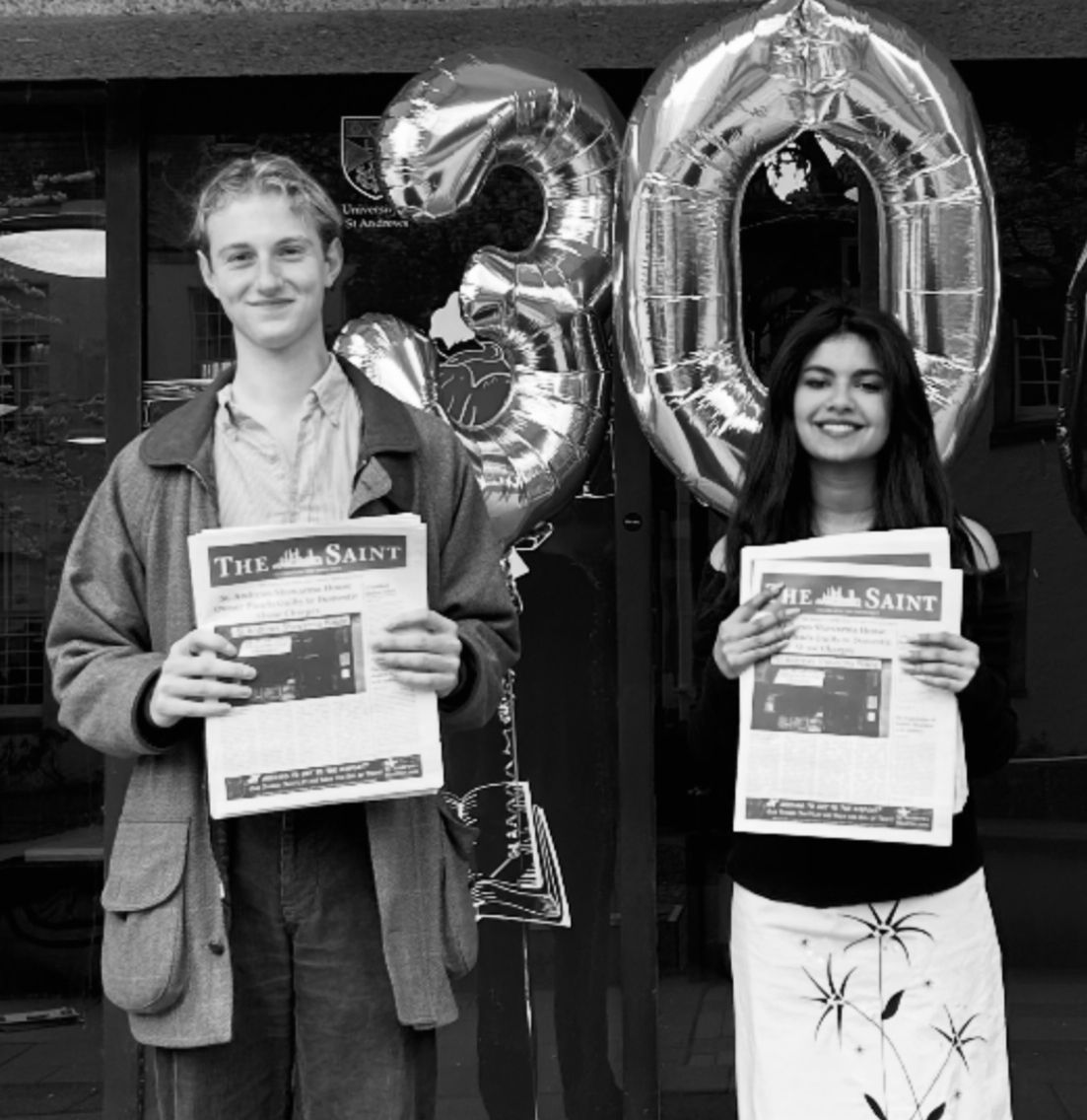
Over the course of the previous week, the University of St Andrews has been confronted with an onslaught of media attention. The University was lately ranked the best university in the UK by The Sunday Times, a designation charged with controversy across the academic sphere. More personal to the student body, perhaps, has been the coverage from various outlets investigating the University’s distinct student culture. The National, The Guardian, and BBC’s ‘The Bubble’ have, within the past week, published reports of the anti-Scottish prejudice, elitism, snobbery, and hedonism that line this town’s three streets.
Thus the year is off to quite a start; shrewd media insights have called the nature of student social activity into question. But the press is a capricious thing, and an imposing one too. To write for a public audience is to insist on your own views, to raise an unflinching argument. Joan Didion called writing “the tactic of a secret bully, an invasion.” Writers may often tell you what to think. Your job is to decide how you must.
Though criticisms of local culture are justified, they are not wholly representative of St Andrews — no single article will ever be. No student body is as homogenous as a media narrative might make it appear.
It is not unreasonable to describe St Andrews’ student culture as a 600-year tension between tradition and revolution. Like the annual storms that punish this town’s cliffs and sands, the centuries have accumulated and washed away the superficialities of our St Andrean identity, occasionally revealing the pure limestone silver beneath. Though seemingly unchanging, this town operates in cycles. Now is again the time to cast off the aspects of our heritage we now find obsolete.
We ask you to consider what indeed it means to be a student at this University. More than world-class academics and generous university rankings, perhaps our reputation lies within our values, our character, and our actions as a student body.
Whatever qualities the students of this university present to the world, we must reckon with them individually as our very own. As students, residents, and participants of a locality that accommodates such diverse and unapologetic characters, we remain accountable for the behaviour that we choose to tolerate and display. The aspects of our university culture that warrant preservation, and those we can in good conscience discard, lie in our hands — their fate is for us to determine.
You will know by now that St Andrews is a peculiar place, that it has its drawbacks. At The Saint, our work is simply to make things known: the good and the bad, the outrageous and the mundane, but all nonetheless significant and worthy of reporting.
We are none of us real scholars or professionals; rather we are the opposite, a group mostly made up of inexperienced undergraduates voicing their opinions, reporting their findings.
Yet that we, every other week, can put together 32 pages — of news, controversy, culture, the very undercurrent of St Andrews’ life and ideas — is meaningful. It tells us that there is something here to be discussed, prodded, questioned. We will put it forth — we ask you to consider it all.
Alden Arnold and Arnaz Mallick


Comments